

Building modern applications no longer requires months of backend engineering before a prototype can be tested. Visual database builder SaaS platforms have transformed how startups, product teams, and even large enterprises approach rapid application development. By combining data modeling, workflow automation, and user interface builders into visual environments, these tools dramatically reduce development cycles while maintaining structural integrity.
TLDR: Visual database builder SaaS platforms allow teams to design, structure, and deploy application backends without writing extensive code. They offer drag-and-drop schema design, automation tools, API generation, and collaboration features that accelerate prototyping. Platforms like Airtable, Supabase, Retool, Backendless, Appsmith, and Knack each serve slightly different needs, from no-code simplicity to developer-first flexibility. Choosing the right one depends on scalability requirements, customization depth, and integration capabilities.
Below are six serious and reliable platforms that enable rapid app prototyping through visual database construction and integrated application development tools.
1. Airtable
Airtable is often described as a spreadsheet-database hybrid, but in practice, it is a powerful relational database platform with an intuitive interface. It excels at helping teams structure data visually without deep technical expertise.
Its core strength lies in simplicity and collaboration. Users can create multiple tables, define relationships, build views, and automate workflows—all inside a clean, spreadsheet-like UI.
- Drag-and-drop interface for tables and views
- Built-in automation engine with trigger-based workflows
- Form and interface builders for quick frontend prototypes
- Extensive integrations and API access
Airtable is especially suitable for internal tools, lightweight SaaS MVPs, and content-driven applications. However, it may not be ideal for highly complex transactional systems requiring advanced backend logic.

2. Supabase
Supabase positions itself as an open-source Firebase alternative, but with a significant distinction: it runs on PostgreSQL. This makes it particularly attractive to teams that want reliability and scalability built on an established relational database system.
Its visual table editor, authentication tools, and auto-generated APIs allow rapid backend deployment while maintaining full SQL control.
- Visual schema editor for PostgreSQL databases
- Automatically generated REST and GraphQL APIs
- Authentication and row-level security
- Real-time subscriptions
Supabase bridges the gap between low-code and full-code development. It is best suited for technically capable teams who want visual acceleration without sacrificing architectural control.
3. Retool
Retool focuses on internal tools and enterprise applications. Unlike purely no-code platforms, Retool allows developers to connect databases, APIs, and third-party services into a visual builder that assembles powerful admin panels and dashboards.
The platform does not host databases in the same way as Airtable or Supabase but provides powerful visual query building and schema interaction capabilities.
- Drag-and-drop UI builder
- SQL query editor with visual components
- Support for multiple data sources
- Role-based access control
Retool is ideal for organizations building operational dashboards, CRM back offices, or logistics tools. It is less focused on public-facing SaaS apps and more on internal efficiency.
4. Backendless
Backendless offers a fully integrated visual app development environment that includes database management, API services, real-time updates, and frontend UI building.
Its visual database schema editor allows developers and non-developers alike to create data structures and relationships without writing SQL. Logic can be defined through a block-based interface.
- Visual database schema designer
- API services auto-generation
- Codeless logic builder
- Real-time database capabilities
Backendless is suitable for teams seeking an all-in-one managed environment. It reduces infrastructure complexity and accelerates the creation of full-stack prototypes.
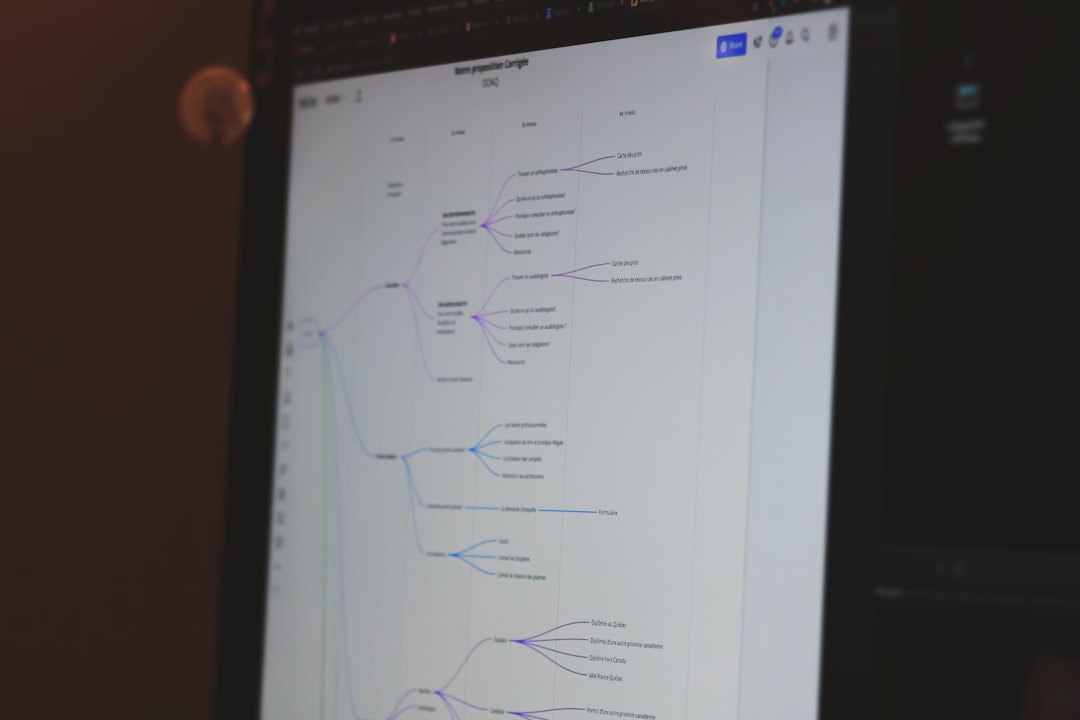
5. Appsmith
Appsmith is an open-source low-code platform designed for building internal tools quickly. It enables teams to connect to databases and APIs while using a visual interface to construct functional frontends.
While Appsmith does not replace the database itself, it provides strong visual interaction with structured data and supports complex logic and workflows.
- Open-source and self-hostable
- JavaScript-enabled logic control
- Prebuilt UI components
- Wide database support
Appsmith is particularly attractive to engineering teams that require flexibility and compliance control through self-hosting, but still want rapid prototyping capabilities.
6. Knack
Knack is a true no-code database builder aimed at non-technical users who need to build structured applications quickly. It abstracts nearly all backend complexity while providing relational capabilities.
Users define objects, fields, and relationships visually. From there, forms, portals, and user roles can be created without writing code.
- GUI-based relational modeling
- Built-in user authentication
- Customizable forms and reports
- Hosted infrastructure
Knack is well-suited for membership systems, directories, inventory tools, and workflow-heavy business apps created by non-developers.
Comparison Chart
| Platform | Best For | Technical Level | Database Hosting | Customization Depth | Open Source |
|---|---|---|---|---|---|
| Airtable | Lightweight SaaS MVPs, team apps | Beginner to Intermediate | Hosted | Moderate | No |
| Supabase | Scalable SaaS backends | Intermediate to Advanced | Hosted or Self-hosted | High | Yes |
| Retool | Internal enterprise tools | Intermediate | Connects to existing DBs | High | No |
| Backendless | Full-stack rapid apps | Beginner to Intermediate | Hosted | High | No |
| Appsmith | Internal tools with flexibility | Intermediate to Advanced | Connects to existing DBs | High | Yes |
| Knack | No-code business apps | Beginner | Hosted | Moderate | No |
Key Considerations When Choosing a Platform
While each of these platforms accelerates app development, choosing the right one requires careful evaluation based on:
- Scalability requirements: Will the app handle thousands or millions of records?
- Compliance needs: Are data governance and security certifications required?
- Customization level: Do you need SQL-level control?
- Frontend flexibility: Is a customer-facing UI required?
- Cost structure: Does pricing scale reasonably with growth?
Enterprise teams often prioritize governance and API control, while startups may value speed and iteration above everything else. Non-technical founders may prefer no-code solutions like Knack or Airtable, while developer-heavy teams will gravitate toward Supabase or Appsmith.

The Strategic Advantage of Visual Database Builders
Beyond pure convenience, visual database builder platforms offer strategic benefits. They reduce technical debt at early stages by enforcing structured schema design from the beginning. They also lower dependency on backend engineering resources during ideation and validation phases.
Moreover, these tools encourage cross-functional collaboration. Product managers, designers, and operations leaders can engage directly with data structures instead of relying solely on engineering translation.
However, it is essential to recognize that rapid prototyping does not eliminate architectural responsibility. When applications evolve into high-scale production systems, migration planning and performance considerations become critical.
Final Thoughts
Visual database builder SaaS platforms represent a significant evolution in how applications are conceived and deployed. By merging structured database modeling with visual workflow and UI creation, they compress development timelines without discarding essential backend principles.
Airtable and Knack serve no-code and business-focused builders. Supabase and Appsmith offer technical flexibility with visual acceleration. Backendless delivers full-stack simplicity, while Retool dominates internal operations tooling.
For organizations serious about rapid prototyping without sacrificing structural discipline, these platforms provide credible and scalable starting points. The key lies not in choosing the most popular option, but in selecting the one aligned with long-term technical and strategic objectives.

Comments are closed, but trackbacks and pingbacks are open.